Book Now
Everest Three Passes trek
During Everest Three Pass trek
Three Pass Trek

Everest Three Passes Trek - 20 Days

Customize Trip
202 reviews in TripAdvisor
81 reviews in Google Reviews
Recommended by 99% of Travelers

The Everest Three Passes Trek is the most complete and adventurous trekking experience in Nepal, designed for trekkers who want to go beyond the standard Everest Base Camp route and truly explore the entire Khumbu region.

Everest Three Passes Trek Highlights

  • Scenic mountain flight to Lukla, one of the world’s most thrilling airports
  • Experience the Gateway to Everest- Namche Bazaar
  • Cross all three high passes: Kongma La, Cho La, and Renjo La
  • Reach Everest Base Camp (5,364m)
  • Sunrise hike to Kala Patthar (5,545m) for the best Everest views
  • Come face-to-face with the majestic beauty of Khumbu Icefall
  • Experience Sherpa culture in Namche Bazaar, Tengboche, and Thame
  • Witness the turquoise beauty of the Gokyo Lakes and glaciers of the region
  • Visit ancient monasteries including Tengboche Monastery
  • Enjoy sweeping views of Everest, Lhotse, Makalu, Cho Oyu, and Ama Dablam among many other Himalayan giants
  • Experience the wilderness of the Khumbu region and Sagarmatha National Park
Duration
20 Days
Trip Grade
Strenuous
Country
Nepal
Maximum Altitude
5,545m (Kala Patthar)
Group Size
1-16
Starts
Kathmandu
Ends
Kathmandu
Activities
Trekking
Best Time
Spring (Mar–May) & Autumn (Sep–Nov)

Everest Three Pass Trek Overview

The Everest Three Passes Trek is the most complete and adventurous trekking experience in Nepal, designed for trekkers who want to explore the Everest region beyond the standard trails. This 20-day trek is a grand circuit that takes you to three high passes, covering three of the highest and most challenging mountain passes: Kongma La (5,535 m), Cho La (5,420 m), and Renjo La (5,360 m) into a single journey. Moreover, the trek also combines the iconic Everest Base Camp route with remote and scenic Gokyo Valley, including other iconic highlights like Imja Valley, Khumbu Valley, and Thame Valley.

This trek is not just about reaching Everest Base Camp; it is about completing the entire Everest circuit, experiencing diverse landscapes, and walking through less crowded trails that offer a deeper connection to the Himalayas. It can be done both clockwise and anticlockwise. The Everest Three Passes Trek distance is approximately 150 km, during which you will encounter the grandeur of the Himalayas, diverse landscapes, and deeper insight into Sherpa culture, all while pushing your physical and mental limits.

From the bustling Sherpa town of Namche Bazaar to the peaceful valleys of Gokyo and Thame, the journey takes you through ancient monasteries, high alpine terrain, glacial lakes, and panoramic viewpoints. Along the way, you will witness some of the world’s highest peaks, including Everest, Lhotse, Makalu, Cho Oyu, and Ama Dablam.

This is a physically demanding trek, but for the trekkers who are prepared, it offers one of the most rewarding and immersive Himalayan experiences.


Want to experience this Everest Three Pass Trek?

Kathmandu Head Office +977 9851093719 / 9841212514 (WhatsApp / Viber)
Mail us at info@beyondthelimitstreks.com
Contact Us Send Inquiry Now
Location of Head Office Open Google Map

Everest Three Pass Trek


Why Choose the Everest Three Passes Trek?

The Everest Three Passes Trek is not just about reaching a destination; it is about completing one of the ultimate adventure Himalayas has to offer, completing the ultimate Everest Circuit.

What makes this trek special:

  • Covers the Everest Base Camp + Gokyo Lakes Trek in one journey
  • Crosses three major Himalayan passes above 5,000m
  • Less crowded and more adventurous than standard routes
  • Offers 360° panoramic mountain views throughout the trek
  • Explores remote valleys like Thame and Gokyo
  • Witness some of the best views of the Himalayas
  • A complete circuit of the Everest region
  • A true test of endurance, rewarding you with unmatched scenery

If you are looking for a trek that pushes your limits while delivering the best of the Everest region, this is the one.


Route Overview (The Journey)

Everest Three Pass Trek gives you an extraordinary journey, crossing Kongma La Pass, Cho La Pass, and Renjo La Pass, which are known as the Three High Pass trek in the Everest Region.  We begin this Trek with a direct flight to the Tenjing Hilary airport, Lukla, which is one of the most exciting airports in the world. Sometimes there are weather issues, and then the plane can't fly to Lukla. If the weather becomes a problem, you will have an option for your trek: either to take a Helicopter to Lukla or you drive a Jeep to Chauri Kharka, Lukla. You can reach Lukla by both airways and roadways now.

From Lukla, you will take a gradual trek through the Dudh Koshi Valley, spending one night in Phakding to Namche Bazaar, where you acclimatize and prepare for higher elevations. We will have 2 nights in Namche Bazaar for acclimatization. On the acclimatization day, we will go on a short hike to Shyangboche - Everest View Hotel. From here, the route follows the classic Everest Base Camp trail through Tengboche and Dingboche, offering spectacular views and cultural encounters.

After a day’s rest in Dingboche, we will have some splendid views of many mountain peaks, and the trail starts to get challenging. We will climb Chhukung Ri (5546m), which is also a point where we can do the Island Peak Climbing. Continuing, you will cross the first high pass, Kongma La, leading into the remote high-altitude terrain near Lobuche and Everest Base Camp. You then hike to Kala Patthar for sunrise views over Everest before continuing toward Dzongla.

The second challenge, Cho La Pass, takes you across glacier terrain into the beautiful Gokyo Valley, where you will explore the famous turquoise lakes and hike up Gokyo Ri for one of the best panoramic views in the Everest region.

Finally, you cross Renjo La Pass, often considered the most scenic of the three, before descending into the quiet and culturally rich Thame Valley. The trek then gradually returns to Namche and Lukla, completing a full circuit of the Everest region.


Scenic Highlights &Key Places during the Three Passes Trek

Below is a list of some of the scenic spots and vantage points along the Everest Three Passes Trek route that you should not miss out on:

  • Everest Base Camp & Khumbu Icefall
  • Kala Patthar viewpoint
  • Gokyo Lakes & Gokyo Ri
  • Renjo La viewpoint (one of the best in Everest)
  • Tengboche Monastery
  • Namche Bazaar
  • Khumjung & Khunde villages
  • Thame Valley

Everest Three High Passes Trek Cost

Our Everest Three Passes Trek costs start from USD 1,595 per person (based on a minimum of 2 participants). For solo trekkers, the cost is USD 1,885, which includes guides, permits, accommodation, 3 times meals, round-trip flights, transportation, and various other complimentary services, which you can explore in the service includes section. 

We focus on quality service, safety, and personalized experiences, ensuring that your journey is smooth, well-managed, and memorable from start to finish. Prices may also vary slightly between travel agencies based on the level of support, accommodation, and additional services provided. Please refer to the table below for the detailed group pricing.

No. of Pax Price Starting from Send Inquiry
1 pax USD1885 Send Inquiry
2 pax USD 1595 Send Inquiry
3-6 pax USD1550 Send Inquiry
7-12 pax USD 1499 Send Inquiry

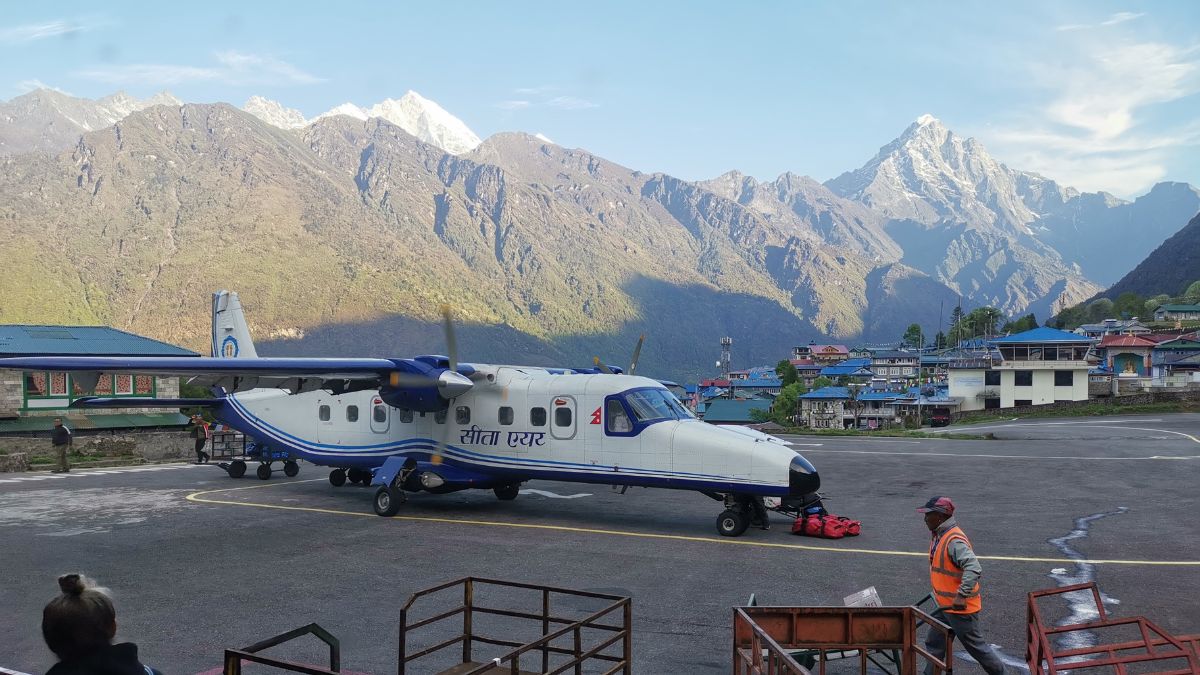
Plane landing in Lukal, gateway to Everest region


Optional Side Trips & Customisation

You can enhance your Everest Three Passes Trek with additional experiences:

  • Climb Gokyo Ri or Chhukung Ri for extra viewpoints
  • Explore the 5th and 6th Gokyo Lakes
  • Visit Khunde & Khumjung for deeper cultural insight
  • Extend your trip with Island Peak Climbing
  • Customise the itinerary based on your time and fitness level

If you are someone who likes to push their limits at times, this trek is the best fit for you. The Everest Three Passes Trek is not just a journey; it challenges your limits, broadens your horizons, and rewards you with the most stunning panoramas.

At Beyond the Limits Treks and Expedition, We specialize in tailor-made trekking experiences, so your itinerary can be adjusted to match your pace, interests, and schedule.


Why Trek with Beyond the Limits Treks?

At Beyond the Limits Treks & Expedition, we are a locally owned trekking company with decades of experience in the Himalayas. Our team understands the Everest region deeply not just the routes, but the culture, weather, and safety considerations that matter most. Here are some of the facts that make us different from most of the trekking companies you can find in internet.

  • Operating treks in the Everest region since 2000
  • Experienced Local Sherpa guides
  • Over 98% success rate
  • 24/7 support throughout the trek
  • A helicopter flight option is available if the Lukla flight gets cancelled because of the weather
  • Strong focus on safety and acclimatisation
  • Flexible and customizable itineraries
  • Personalised service from inquiry to departure
  • Strong local connection among people and villages in the Everest Region
  • Easy Payment System
  • No hidden cost

We don’t just organise treks, we create well-planned Himalayan experiences designed around you.

Booking Notice

The Everest Three Passes Trek is a challenging journey, but with the right preparation and support, it becomes one of the most rewarding adventures in the world. Book your Everest Three Passes Trek 2026 and 2027 now. If you are looking for more information on the Everest Three Passes or any Everest trek in Nepal, contact us anytime. We have been offering our services in the Everest region since 2000, and our team consists of all local professional guides with years of experience. Read our Everest Three Passes Complete Guide for more information.

Contact us today to:

  • Get a detailed itinerary and cost breakdown
  • Customize your trekking plan
  • Check availability for Spring & Autumn departures

Send us an inquiry and let our expert team help you plan your journey to the roof of the world.

Everest Three Passes Trek - 20 Days Itinerary

If this itinerary is not suitable for you. Please contact our travel expert for a customized itinerary

Kathmandu to Kathmandu

Expand all

Upon your arrival at Kathmandu International Airport, you will be warmly greeted by a representative from Beyond the Limits Treks and Expedition. Our airport representative will escort you to a comfortable vehicle for a hassle-free transfer to your hotel. Once you arrive at the hotel, we'll go over the itinerary in detail to ensure you have a smooth and enjoyable trip. Our Trek leader will meet and give a short briefing regarding the Gokyo ri trekking. We take care of the details, so you can focus on the adventure ahead!

Stay overnight in the hotel.

This day is crucial as you will have a final check of your gear before heading out for a self-guided sightseeing tour. If you would like to have a guided tour of the Kathmandu Valley, simply let us know and we'll be happy to arrange it for you.

The day begins with an early morning breakfast followed by a 35-minute scenic flight to Lukla- the most dangerous airport in the world. However, during peak seasons, you will be flying to Manthali Airport at Ramechhap instead due to busy air traffic.

Lukla village at (2,800m/9,186ft) marks the starting point of the trek. From here, you will meet the porters and kick start our adventurous journey to Phakding, which lies at an altitude of 2610m (8,563 ft).

The downhill journey alongside the banks of Dudh Koshi feature different vegetation and dramatic landscapes. The total time required to reach Phakding is approximately 4 to 5 hours. You will be staying here at a hotel overnight.

Today, you will be entering Sagarmatha National Park as you exit Phakding and continue your trek upwards through charming and friendly villages, while also crossing several suspension bridges, along with the iconic Hillary Suspension Bridge.

A final steep ascent towards the end takes you to the bustling Sherpa capital, Namche Bazaar. This will be your resting spot for the day and also first of the many acclimatization spots on the trek. Overnight stay at Teahouse

This is a crucial acclimatization day. You will not be spending your whole day in the hotel or teahouse, instead, you will be going for an acclimatization hike to Hotel Everest View. While in Namche Bazaar, you will be getting the first glimpses of Mt. Everest as well as Ama Dablam. This bustling city also has most of the facilities including ATM, shops, bakeries, restaurants, etc.

You can also explore the local market to purchase any souvenirs and local handicrafts like Thangka Paintings. The days ends with an evening dinner accompanied by Sherpa stories, and a good night's sleep.

This day begins with a trek towards Tengboche as you start a gradual ascent with stunning views of Ama Dablam, Thamserku, Everest, Lhotse, and Nuptse. The trail descends to Phunki Tenga and then ascends again through rhododendron and pine forests to Tengboche which is home to the largest monastery in the Khumbu region- the Tengboche Monastery.

A trek of around 5 to 6 hours brings you to Tengboche, where you will be spending the rest of the night resting in a teahouse.

On this day, you will trek for 5 to 6 hours from Tengboche to Dingboche. The trail is particularly challenging with many ascents and descents. However, the stunning natural beauty of the area makes it worthwhile. The trail first descends through a forest to reach Deboche and crosses the Imja Khola. From here on, the vegetation thins out as you ascend to Pangboche, a traditional Sherpa village.

The trail then continues to Dingboche while you are accompanied by stunning views of the Himalayas. Dingboche is situated at an elevation of 4,410 meters above sea level and features stunning views of Ama Dablam.

Dingboche marks your second acclimatization stop on the trek. On this day, you will be going on a hike to Nangkartshang Peak (5,083m) for incredible panoramic views of Makalu, Lhotse, Cho Oyu, and Island Peak. This hike embraces the "climb high, sleep low" strategy and allows your body to adapt.

This is a relatively easy and short day as you head towards Chhukung, passing through a picturesque landscape of stone-walled fields, the Imja Khola valley, and glacial moraines.

The magnificent glimpses of Ama Dablam along the way further adds beauty to the trek. You will cross icy streams as you reach Chhukung where you will be spending your night. This town serves as the base for Island Peak climbers.

This is an important day on the trek as you will be crossing the first and most challenging one of the Everest Three Passes. You will start early to be able to easily cross the high mountain pass without much wind and bad weather.

The trail is steep and rocky, leading to the breathtaking Kongma La Pass at 5,540 meters. From the top, you'll have astounding views. Once you have taken in the views, a challenging descent takes you to the Khumbu Glacier moraine and then to Lobuche.

Brace yourselves because this is the day that you will be visiting the iconic Everest Base Camp. The trail begins as a relatively flat but challenging walk along the lateral moraine of the Khumbu Glacier.

As you reach Gorakshep, you stop for a quick lunch. Then a hike upwards takes you to the Everest Base Camp as you cross rocky dunes, moraines, and streams before reaching the base camp of the world’s tallest mountain.

Take a minute to bask in the glory of the view that lies in front of you as you get to admire Nuptse, Khumbuste and Pumori mountains. Then you descend back to Gorak Shep and spend the night here as this is the highest overnight stop around Everest Base Camp three passes trek.

On this day, you will reach the highest point of this trek and also an important vantage point- Kala Pathhar which boasts stunning sunrise views as the orange hues paint Mt. Everest.

Your day begins early with a hike to Kala Patthar just before sunrise. The view of Mt. Everest is the best from here along with other surrounding peaks like Pumori, Nuptse, Lhotse, Ama Dablam, and more. After the spectacular sunrise, descend back to Gorak Shep for breakfast. The descent continues as you later head down to Dzongla via a mostly downhill and flat trail.

Brace yourself for the second pass! From Dzongla, you need to ascend upwards and this can be very challenging. The trail is steep which is further worsened by boulders.

The journey also requires you to cross glaciers and icy crevasses where micro spikes might come in handy. The final climb to Cho La Pass rewards you with stunning views of Cholatse and Ama Dablam.

The top of the pass is dotted with fluttering prayer flags and rustling wind, and the view from here is absolutely breathtaking. A challenging descent follows to Thagnak, a small settlement where you will be staying for the night.

Another relatively easy day on the trek, today you will follow the Ngozumpa Glacier and go past several glacial lakes, including the picturesque Longpongo, before ascending a steep ridge to reach the Gokyo Valley. At the Gokyo Valley, you will take in the stunning views of the surrounding peaks, including Cho Oyu and Mount Everest.

On this day, you will explore the serene Gokyo Lakes and take in the majestic views that reflect in the clear water of these high altitude alpine lakes. You can start with the fourth Gokyo Lake which is only 3km north of the Gokyo Village.

From there, you can continue towards the 5th lake and further ahead to other lakes if you find it possible. You will get stunning views of Cho-Oyu, Gyachung Kang, Everest, Lhotse, Nuptse, and Makulu mountains, and the huge Ngozumpa Glacier. You descend back to Gokyo for overnight stay.

Today you conquer the final high pass of the three passes trek. The day begins early, and the trail moves alongside Dudh Pokhari for a while after which you will descend towards the Renjo La pass at 5,360 meters. From the pass, you will get views similar to the ones you got from Gokyo Ri which encompasses breathtaking views of the Gokyo Lakes below and a new perspective on Everest, Cho Oyu, and other Himalayan peaks.

As you descend from Renjo La, the trail is steep and rocky which then moves over loose scree to reach the south bank of Angladumba Tsho Lake. The presence of ice on the trail while descending can be challenging. You will walk down a narrow valley clogged with giant boulders to Lumde where there is a support lodge, but it is often closed. Then you will walk almost for an hour from Lumde to get to Marlung which will be your resting spot for the day.

The descent from Marulung to Thame follows a traditional route used for centuries by the Tibetan traders. We cross the Bhote Koshi River and descend to Taranga. The trail continues to descend and we cross two bridges before reaching Thame. Overlooking Thame is its famous Gompa, situated on a hill to the west.

After a night’s rest in Thame, continue descending through rhododendron and pine forests. You will cross many Sherpa villages like Thamo and Namche Bazaar too. You can stop for a while at Namche Bazaar. Followed by the break, continue your descent towards Monjo after you once again cross the Hillary suspension bridge. This peaceful Sherpa village will be your home for the night.

Take as much as mental photographs as you can as this will be your final day in the Khumbu region. After breakfast in Monjo, continue your gentle descent towards Lukla as you pass small chortens, monasteries, and colorful prayer flags.

Reaching Lukla marks the end of your incredible trekking journey of almost three weeks. Celebrate your achievement with your trekking crew.

On this day, you will enjoy your traditional breakfast at Lukla after which you will be transferred to Lukla airport. An early morning adventurous flight will take you back to Kathmandu, barring any delays.

Upon arrival in Kathmandu, you will be taken back to the hotel, where you can rest. You can also explore the city and go souvenir shopping if you want.

Then, you will be free from our program and in your departure Day, Beyond the Limits Treks will arrange you a private vihecle to drop you off to airport.

Not Satisfied with this Everest Three Passes Trek - 20 Days itinerary?
Are you interested in planning custom trip? It only takes 2 minutes.

Everest Three Passes Trek - 20 Days Route Map

Three-Pass-trek-Map

Altitude Chart

Three Pass Trek Altitude Graph

Cost Details

Includes

  • Pick up from the Airport on your arrival Day
  • 3-night hotel in Kathmandu 3 star standard standard service
  • A Trekking guide
  • Assistance guide ( more than 6 clients in group size)
  • A porter can be provided it is an extra cost. If you like to take a porter $22 per day and can carry about 20 kilos
  • Accommodation in Twin Sharing bed basis on trekking trails during trekking
  • Daily freshly cooked meals three times a day( Breakfast, Lunch & Dinner)
  • Daily fresh fruits after Dinner
  • Sagarmatha National Park Park Permit
  • Pasang Lhamu rural muncipility development park permit
  • Airport tax
  • All Ground transportation as per itinerary
  • Your round-trip flight to & from Lukla
  • Round trip flight for guide and Assistance guide
  • Insurance & equipment for guides & Porters
  • An emergency rescue service is arranged. (it will be working your travel insurance and medical insurance)
  • Drop at the Airport on your departure day
  • Oximeters
  • water Purified Tablate
  • Emergency rescue service arrangement ( Please do Insurance from your country that covers Medical and Evacuation)
  • Sleeping bag on request (you have to return after your Trek)
  • Complimentary Duffel bags to keep your belongings to be carried by a porter if required
  • Certificate of achievement

Excludes

  • All drinks( Hot/cold/Alcoholic on the mountain)
  • Personal Nature expenses
  • Travel Insurance( please do insurance from your country that should cover Medical and evacuation if needed)
  • Nepal Visa Fee( Can be received on your arrival day in Kathmandu Airport by paying 30US$)
  • Porters to carry bags (extra US$22 per day)
  • If more than a 3-night hotel in Kathmandu
  • Meals in Kathmandu
  • Hot shower during the trek
  • All chargeable batteries, camera
  • Temple and Monastery fee in Kathmandu
  • Tips for guide and porters( if you will have a porter )
  • Service not mentioned above
  • Political unrest or Natural disaster may cost you extra
  • In any case you returning earlier than your Itinerary may cost you extra

Add-ons & Options

Beyond the Limits Treks and Expedition Enhance your experience with these customizable options. Whether you are looking Private tour. If you like to take a Porter, if you like to fly in and out from Tenzing Hillary Airport, Lukla by Helicopter, if you like to have a private attached bathroom for extra comfort, cultural immersion, or adventure, we’ve got something for everyone.

  1. Kathmandu Hotel Upgrade(Our service offers a 3-star standard service in Kathmandu. If you like to stay in Luxury contact us 
  2. Kathmandu to Lukla Helicopter Flight at USD 500
  3. Lukla to Kathmandu by Helicopter USD 500
  4. Single room supplement USD 150
  5. Porter Service  USD 450

How to add options for your Everest Base Camp Trek?

  • Step 1: Click the "Book Now" button or your preferred departure
  • Step 2: Select the number of trekkers for the trek
  • Step 3: Select the desired add-ons according to the number of people
  • Step 4: Complete your payment process

Dates & Availability

Please look at our departure date. if these dates are not suitable, we can customize according to your availability or private departure 

Essential Information

Best Time for Everest Three High Passes Trek

The best time to do the Everest Three Passes Trek is during Spring (March to May) and Autumn (September to November), which are the peak trekking seasons in Nepal.

During these months, you can expect stable weather, clear skies, and the best mountain views. Temperatures are moderate, making long trekking days more manageable, while visibility remains excellent for panoramic Himalayan scenery.

Spring brings blooming rhododendrons and slightly warmer conditions, while Autumn offers crisp air and the clearest views of peaks like Everest, Lhotse, and Ama Dablam. These seasons also coincide with major local festivals, adding a cultural dimension to your journey.

Although trekking is possible in winter and monsoon, these seasons come with harsher conditions, including extreme cold, snowfall, or poor visibility, making them less suitable for crossing high passes.


Everest Three Passes Trek Difficulty and Acclimatization

The Everest Three High Passes Trek is considered a strenuous and physically demanding trek, designed for trekkers with good fitness levels and strong determination.

This trek involves:

  • Crossing three high passes above 5,000 meters
  • Long trekking days (7–10 hours)
  • Steep ascents, descents, and glacier crossings
  • Extended time at high altitude (above 4,000 meters)

While a good trekking experience is highly recommended, it is not mandatory if you are well-prepared physically and mentally.

Acclimatization plays a critical role in completing this trek successfully. Our itinerary includes proper rest and acclimatization days in key locations such as Namche Bazaar, Dingboche, and Gokyo to help your body adapt to the altitude.

Following basic guidelines like staying hydrated, maintaining a steady pace, and following the principle of “climb high, sleep low” will significantly reduce the risk of altitude sickness.

Namche Bazaar mountain view


Accommodation during the Everest Three Pass Trek

Given the teahouse trekking culture in Nepal, the Everest region is well facilitated with teahouses across all the trekking routes. Therefore, on the Everest Three Passes Trek, you will be primarily staying in teahouses run by local Sherpa families.

You will get basic amenities like rooms with private washrooms, blankets, beds, wifi, and hot showers at lower elevations. However, these amenities significantly decrease as the altitude increases. You can expect a shared room with a shared washroom along with a bed and blankets in all the teahouses. Any other facility, like wifi,a  hot shower, and electricity, is a pleasant addition.

There is a communal dining room where you can delve into the delicious warm meals as you listen to the stories shared by your local hosts while building camaraderie with your fellow trekkers.

Namche Bazaar Teahouse

Weather and Temperature

The weather in high-altitude Himalayan regions can never be predicted accurately, no matter how much you look into weather forecasting. But comparing the last 10-15 years, weather conditions in the Everest region vary depending on the season and altitude.

During Spring and Autumn, daytime temperatures are moderate ranges between 10 to 15° C in lower regions and between 0 to 10° C in higher altitude regions, while nights can be cold, especially at higher elevations. Winter brings extremely cold temperatures, with daytime temperatures ranging from -10°C to 0°C at higher altitudes. This temperature can drop to -20°C or lower at night., while the monsoon season results in cloudy skies and reduced visibility.

It is important to be prepared for sudden weather changes at all times.


Flights to Lukla

The trek begins with a scenic flight to Lukla, which takes approximately 30 minutes from Kathmandu.

During peak trekking seasons first week of October to the last week of November and the first week of March to the last week of May, flights are often operated from Manthali Airport in Ramechhap due to air traffic congestion in Kathmandu. This requires a 4–5 hour drive from Kathmandu.

Flights to Lukla are weather-dependent and can be delayed or canceled. Therefore, it is recommended to keep some buffer days in your travel plan. Helicopter options are available if needed.

Plane getting ready for flight from Lukla

Permits and Documentation

Each trek in Nepal requires you to obtain certain permits. While we at Beyond the Limits trek will be taking care of the permits for you, it is important that you know what permits you actually need.

  • Sagarmatha National Park Permit
  • Pasang Lhamu Rural Municipality Entry Permit
  • TIMS Card (Trekkers' Information Management System)

Along with this, you need basic documents like your passport, passport-size photographs, and all your travel insurance details for any unforeseen circumstances.


Typical Daily Routine

A typical day on the trek begins with breakfast at the teahouse, followed by several hours of trekking with a lunch break along the route.

After reaching the destination for the day, you can relax, explore the surroundings, and enjoy dinner at the teahouse. Evenings are usually spent resting and preparing for the next day.

COnsult with locals for Everest Three Pass trek

Everest Three Passes Trek - 20 Days Equipments

While you need to carry all your essentials as per your three passes trek itinerary, it is also important to manage the weight as you don’t want your backpack to drag you down on the trek. Below is a standard packing list:

Clothing

Base Layer:

  • Technical fabric base layers
  • Moisture-wicking and heat-insulating shirts
  • Merino wool or synthetic short & long sleeve shirts
  • Synthetic base layer trousers
  • Mid Layer:
  • Insulating shirt
  • Insulating trousers

Outer Layer:

  • Waterproof and windproof jacket
  • Waterproof pants
  • Down jacket
  • Fleece jacket

Other Clothing Essentials:

  • Warm hat / knitted cap / beanie
  • Sun hat / cap
  • Gloves (including liner gloves)
  • Socks (multiple pairs)
  • Underwear
  • Comfortable trousers (for teahouse wear)
  • Hiking shorts
  • Buff or neck gaiter

Footwear

  • Sturdy trekking boots
  • Gaiters
  • Liner socks
  • Ice cleats or microspikes (for icy sections)

Sleeping Gear

  • Sleeping bag (rated -10°C to -20°C)
  • Pillowcase or small travel pillow

Backpacks & Bags

  • Duffel bag (provided by Beyond the Limits Treks; carried by porter)
  • Daypack (25–35L for daily use)
  • Waterproof backpack cover
  • Small padlock (for teahouse room security)

Hydration & Nutrition

  • Reusable water bottles (at least 2 liters total)
  • Water purification tablets or water filter
  • Snacks: energy bars, dried fruits, nuts

Toiletries & Personal Care

  • Sunscreen (high SPF)
  • Lip balm (with SPF)
  • Toothbrush and toothpaste
  • Quick-dry towel
  • Wet wipes/tissues
  • Hand sanitizer
  • Small soap/shampoo sachets
  • Earplugs
  • Eye mask

First Aid & Medications

  • Personal medications
  • Diamox (for altitude sickness – consult your doctor)
  • Blister plasters (e.g., Compeed)
  • Painkillers (ibuprofen, paracetamol)
  • Anti-diarrhea tablets
  • Antiseptic cream
  • Band-aids, tape, and gauze
  • Personal first aid kit

Electronics & Accessories

  • Headlamp (with spare batteries)
  • Power bank
  • Charging cables
  • Plug adapter (Nepal uses Type C, D, and M plugs)
  • Camera / smartphone
  • Extra memory cards
  • Playing cards / small games
  • Journal & pen
  • Whistle (for emergencies)
  • Duct tape (for temporary repairs)
  • Pocket knife / multi-tool

Documents & Money

  • Valid passport
  • Passport-size photos (for permits)
  • Travel insurance copy
  • Trekking permits (handled by us)
  • Money belt or neck pouch

Everest Three Passes Trek - 20 Days FAQs

Expand All

The Everest Three Passes Trek in the Everest region is a high-altitude trekking circuit in Nepal that encompasses of three high-altitude mountain passes including Kongma La (5,535 m), Cho La (5,420 m), and Renjo La (5,360 m).

Think of it as a lollipop loop trek spanning across a duration of 18 to 21 days which takes you to some of the most iconic locations in Everest region including Everest Base Camp, Tengboche, Namche Bazaar, and Kala Pathhar which is the pinnacle of the trek at 5,555 meters.

Yes, it is possible to do Everest Three Passes Trek without EBC and it reduces a couple of days from your overall trekking duration. Many trekkers opt for this variation of the trek as well. However, Everest Base Camp Three Passes Trek is the more common variant as you will be reaching up to Lobuche anyways, which is very close to Everest base camp.

Reaching so close, not many trekkers would want to miss out on one of the main highlights of the region. Therefore, they combine the Everest Base Camp with Three Passes trek.

The Everest Three Passes Trek is considered to be one of the most challenging teahouse treks in Nepal due to the three high altitude passes, constant exploration of altitudes beyond 5,000 meters, and long trekking days.

Along with that, the landscape of the three passes trek route is quite rugged too which might require technical skills in some sections of the trek. It demands a high level of physical fitness, proper acclimatization, and mental resilience. Prior experience with multi-day treks at altitude is strongly recommended.

The standard Everest three passes trek distance is considered to be around 150 km that is covered over a duration of approximately 18 to 21 days, depending on your itinerary, pace, and any extra detours.

While some variations like Everest Three Passes without EBC trek can shorten the duration to 15 to 17 days, other variations and side trips can increase the trek by up to 3 to 5 days.

On an average, the standard Everest Three Passes Trek cost can range anywhere between 1800 to 2400 USD per person based on the inclusions of the trek and the services provided.

This Everest three passes trek cost usually includes:

  • Permits
  • Domestic flights (Kathmandu–Lukla roundtrip)
  • Guide and porter services
  • Accommodation and meals during the trek
  • Ground transportation

This cost can significantly vary based on group size and trip customization. At Beyond the Limits trek, the standard Everest Three Passes Trek cost is USD 1985 per person. Book your trek today!

As of 2025, solo trekking has been banned in Nepal citing the safety of the trekkers as well as the maintenance of the fragile high-altitude trekking regions of Nepal. This means you do need a guide for three passes trek. And this works in your favor as a licensed and experienced trekking guide can make your trek much easier, safer, and comfortable.

Given the difficulty of the three passes trek, it is important that you are well prepared both physically and mentally before you embark on this strenuous adventure. You should start training at least 8 to 12 weeks prior to the trek. Build a full-fledged workout routine that includes lots of cardio, strength training, and stretching.

The cardio helps strengthen your heart and lungs while strength training focuses on your back, shoulders, and calves which helps you trek with a weight on your back. Altitude stimulation is a great preparation tactic too!

The three passes trek can be completed in both clockwise and counterclockwise directions. However, the standard approach is to do the trek counterclockwise for the ease of trekkers.

While trekking anticlockwise, you will conquer the highest and the most challenging pass of the three passes first. It will allow you for gradual elevation gain and make future trekking days slightly easier.

What Our Clients Says?
81 reviews
59 reviews
Once in a Lifetime experience

Trekking like this is why you like to thank nature. My 23 Days Three Pass Trek in Everest is a huge achievement for me as I had been planning it for a couple of months now. Reaching Everest is another...

read more +
Abhishek Gupta - United Kingdom
November 04, 2024
A
Affordable Everest Three Passes Trek Cost

I am quite surprised by the trek's twists & turns during the trek. Although it was not easy as it was my just 2nd trekking experience, that too at this altitude, but I made it and I feel proud of...

read more +
James Brunel - Denmark
October 18, 2023
J
Adventurous Three Pass Trekking

My wife Hyang Sook and I trekked for 20 days in the Three Pass trek with Ang vai Sherpa as a Local guide from Beyond the Limits treks. It was a very enjoyable time, and we recommend him for your...

read more +
Aaron J. Ostrander - United States
April 03, 2019
A

You May Also Like

Need Help? Call Us+977 9851093729